
Royal Navy Police and Regulating Branch Museum Hub
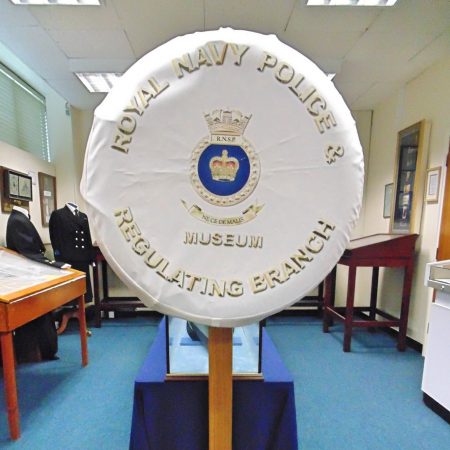
The Museum is more than a static room. Within it breathes the events which formed where we are today as a branch underpinned by significant events in Naval history.
A collection which is a labour of love by those who served to catalogue, detail, arrange and collect items of historical and personal interest, these are the people who bring history alive again.
Your support in donating items to the Museum enhances the dynamic part to our story and your story so that we can continue to pass the baton to future generations.
We thank all who have previously contributed to the collection and those who plan to donate in future. We could not do what we do without the support of everyone involved in the Museum, service family and friends.
Artefacts
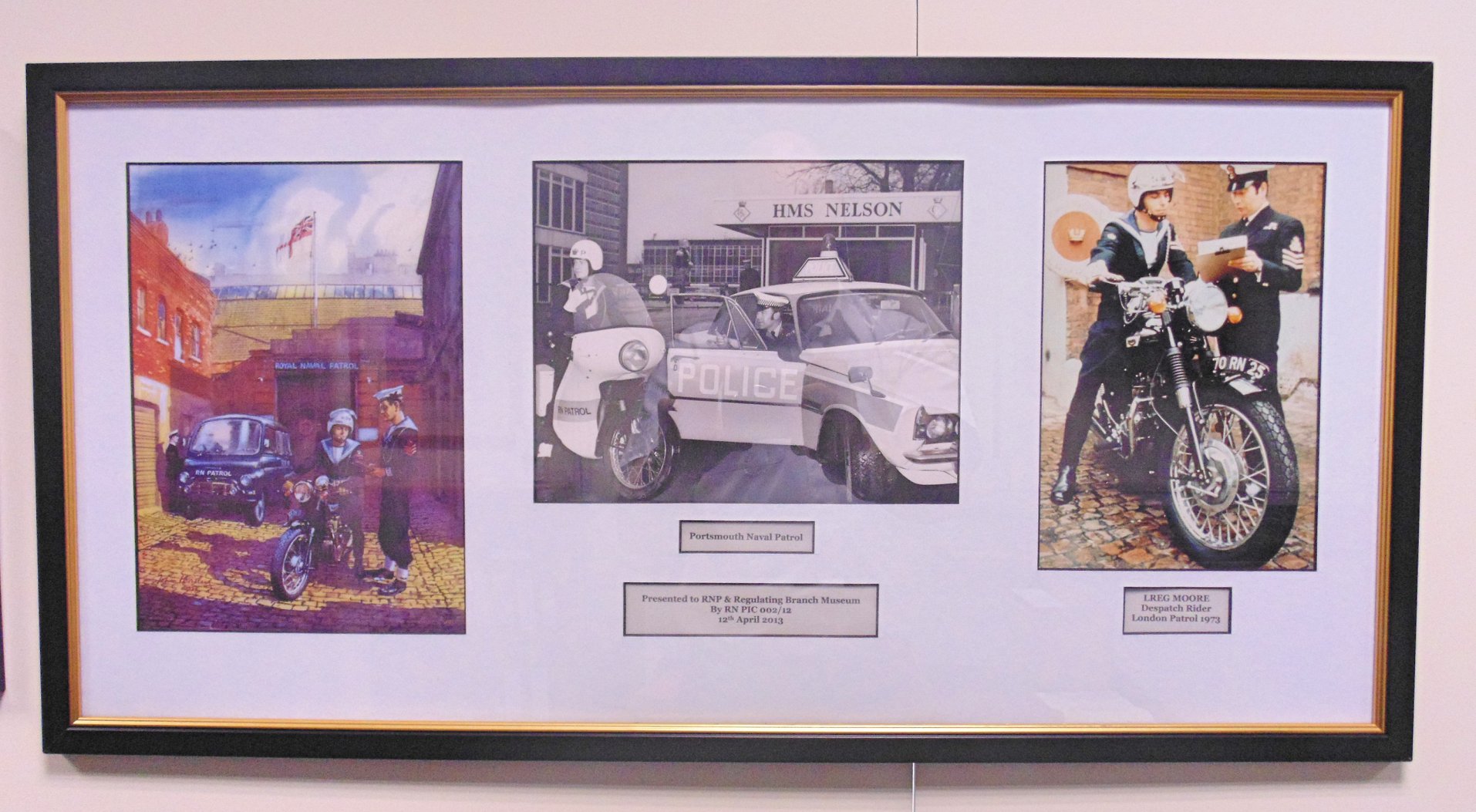
What started as a personal endeavour has grown into a fascinating collection of artefacts, documents, photographs, and memorabilia demonstrating the face of change in Royal Navy policing over the decades.
We are fortunate that many members of the association, families and external parties have donated personal items, stories, even their uniform to the Museum. A place where their name and service is documented with much appreciation well into the future.
Some examples range from a Motorbike, Ceremonial Swords, A Beefeaters uniform and the uniform one of our dearest WRNS to name but a few.
To capture the human element behind the item our Curator has started a project to record and share short story video clips, a selection of which are found in the Museum introduction, in case you missed it first view.

Key figures in history
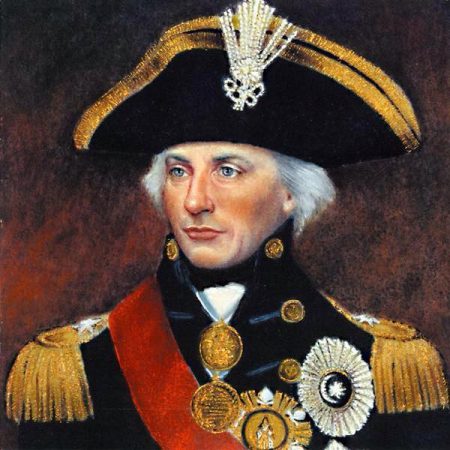
Whilst much of the Museum has the story of policing within the Royal Navy in focus. We embrace the many traditions, naval, ceremonial and memorial as well as the many events which celebrate and remember key figures in our history who have gone before us.
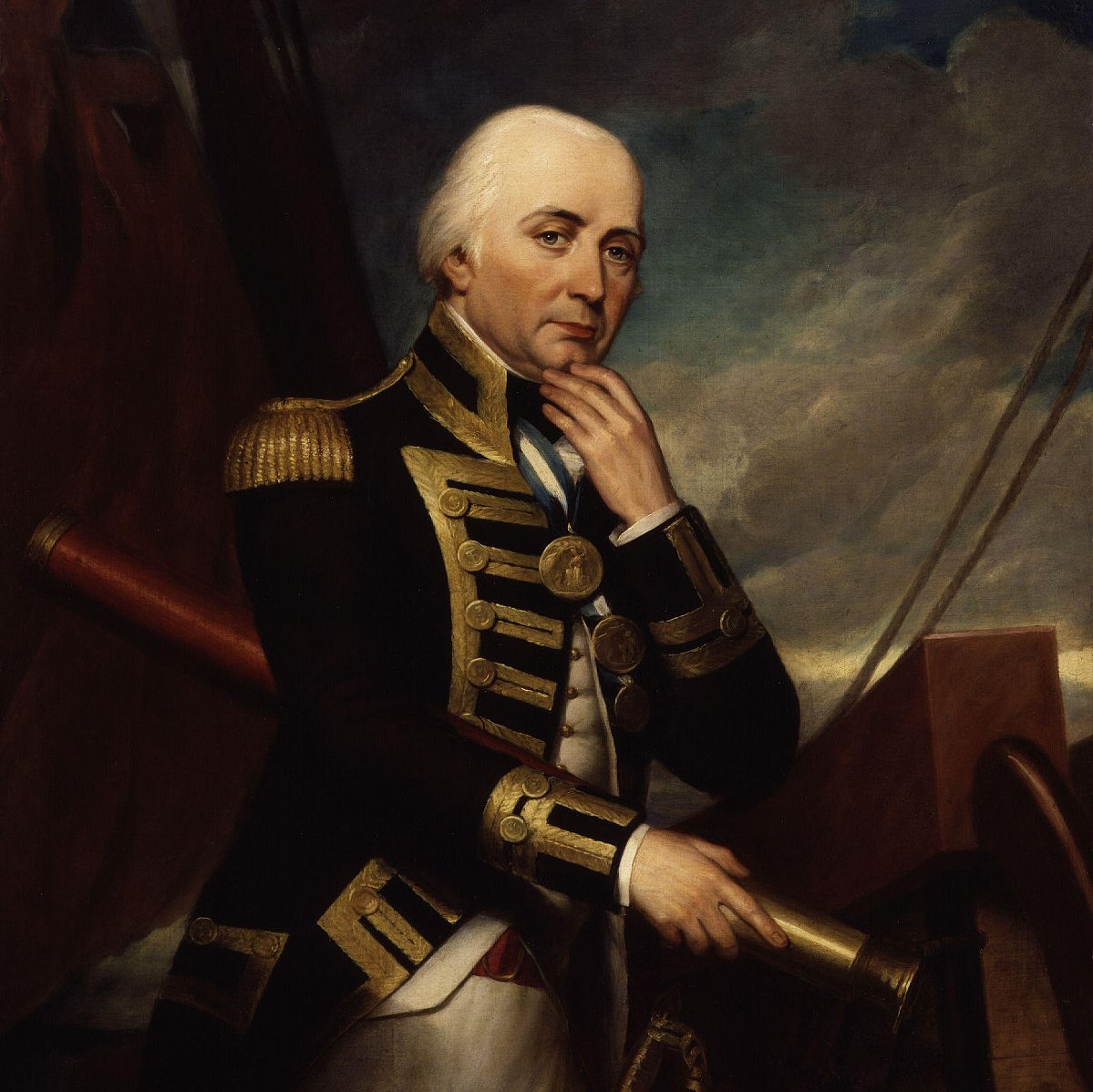
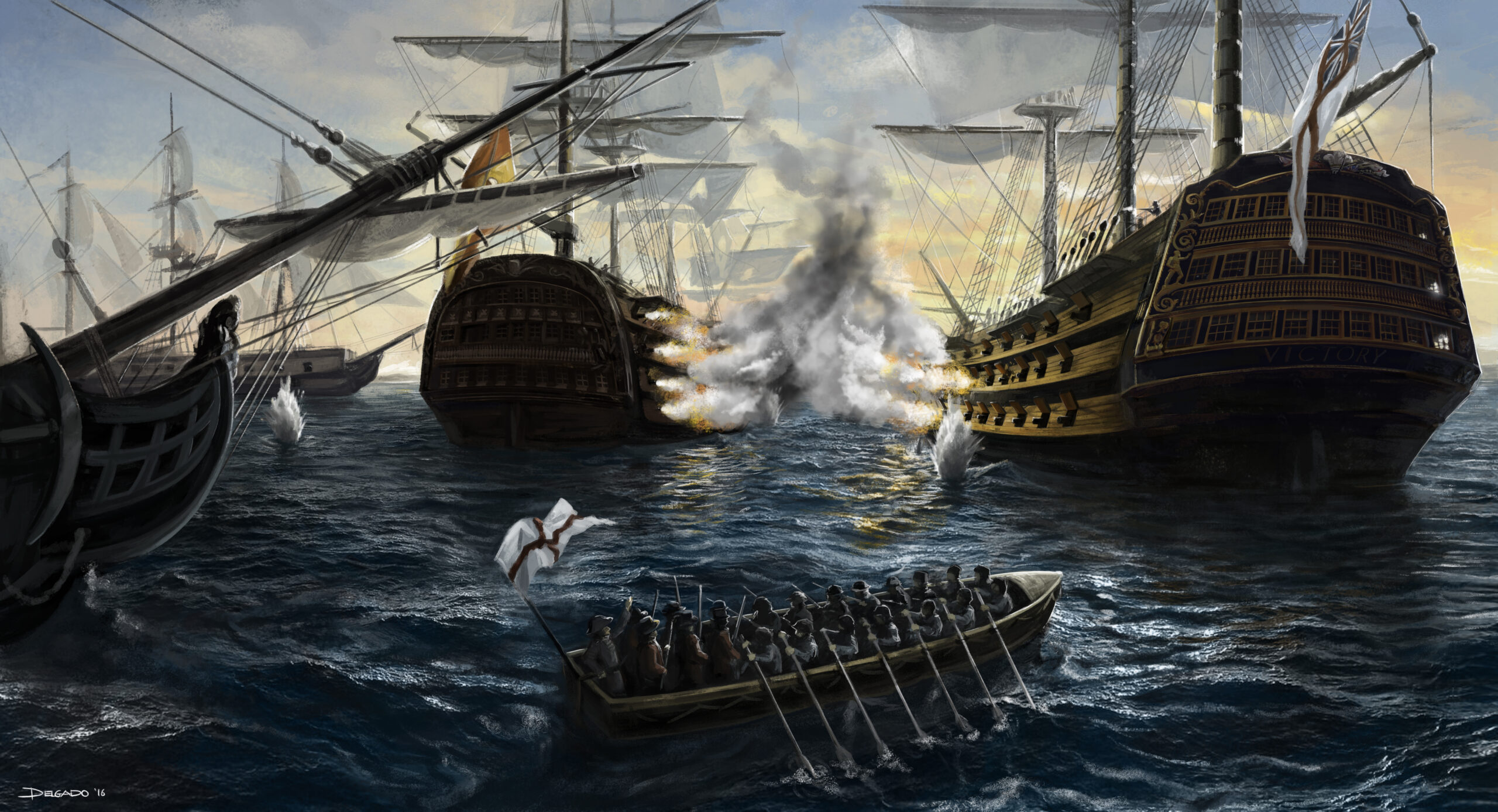
A new edition to the Curators Catalogue is the introduction of Fact Sheets which can be found in the Members area. The initial selection is small and is being developed to provide background information on many of the names part of our everyday history and familiar to many of us. From Vice-Admiral Horatio Nelson known as Admiral Nelson, Vice-Admiral Cuthbert Collingwood, Lieutenant John Richard Lapenotiere, to other leaders and stories simply of good interest, good humour and good note.
Key events
The Armed Forces events calendar is full of days which are important to each of us, collective and individual celebrations and commemorations, some of which we have touched upon throughout the website.
As with the homage to key people we are building a repository of fact sheets to share the background to each of the main events to share why these dates remain important not only in terms of historical significance but also to link to how the events shape the Naval and Policing family of today.
It is an iterative process and we have now added a section where personal stories can be published to again capture the human side of such events beyond a sequence of days and dates.


D-Day map room
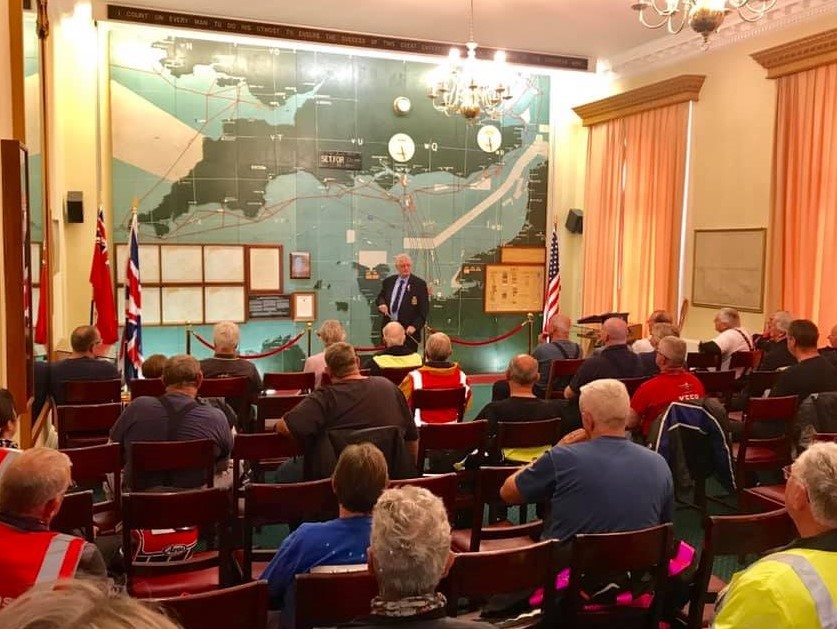
The D-Day map room has a special legacy of its own, steeped in strong historical significance, not only in terms of the events of the time but also the stealth of the people responsible for decisions to secure the protection of a nation and neighbouring friends.
Housed in Southwick House, once a splendid family home which became the headquarters of the main allied commanders Admiral Ramsay, General Eisenhower, General “Monty” Montgomery.
The drawing room modified to become the famous map room where the D Day landings were planned. The map itself was produced by the International Model Aircraft Factory in Wimbledon.
The D-Day map room remains a favourite of many a visitor and the stories of the day come alive through the Curators expert talks.
Modern changes - people
It is fitting therefore is fitting to draw reference to the contribution of the Women’s Royal Naval Service, affectionately referred to as Wrens. The original Motto of “Never at Sea” acquired due to their initial support roles.
Established in 1917 by the end of WWI, seeds were sown for the women of the WRNS to expand their duties outside of the initial clerical work to driving, coding and more.
Popularity grew in WWII and as time progressed the integration of the services became inevitable with the first existing wrens volunteering for sea service, joining HMS Brilliant in October 1990 and 4,535 wrens fully integrated at disbandment of the WRNS 3 years later, on 1 November 1993.
Naval Women have made and continue to make an outstanding contribution to the Naval Service and recently celebrated its 100th centenary.
W.R.N.S – history of the Wrens factsheet:
www.royalnavy-mod.uk/wrns100 or www.wrns100.co.uk

Changes to Rank/Titles
a. Leading Regulator to become Leading Hand (Police) – LH (Police). b. Regulating Petty Officer to become Petty Officer (Police) – PO(Police).
c. Master-at-Arms to become Chief Petty Officer (Master-at-Arms) – CPO(MAA) but still referred to as Master At Arms.
d. Warrant Officer (Master-at-Arms) to become Warrant Officer 1 (Police) – WO1(Police).
e. The position of Naval Provost Marshal (NPM) to become Regional Police Commander (RPC).
f. The position of Assistant NPM to become Warrant Officer Investigations and Policing (WOIP). Image credit: CL Solutions
Internal training
As with many an organisation, change is expected and constant.
As a training environment we continue to learn and improve, adapt and to perform at the highest standards. Skills and specialties which are useful both internally and to externally aligned organisations, build on a bedrock of rich history and naval excellence and policing specialisation.
We offer as a Museum a place for any new intakes, current serving personnel and veterans to continue their learning through what the Museum can offer. and we look forward to continuing to welcoming any participant of the training school, organisations and individuals.
Showcasing stories
When we look back over time and in the present day Armed Forces, people are the centre point of all that we do and achieve together.
Whilst many stories pass within families, generation to generation, it is often in our twilight years that we think about our experiences and what kind of legacy or life we have had.
Here the Museum is a shining example, collecting many different strands of a life in service with the aim of keeping the facts and consistency together bound together by the glue which is the human story. We aim to continue to build on this legacy, with your help and capture more of the essence of what it means to be part of the Royal Navy family. “Dit alert” Share your story and please take a moment to watch, read or listen to the amazing recollections in BZ.
Visits
The Royal Navy Police and Regulating Branch Museum under the safe hands of it’s Curator often welcomes guests and visitors.
Whilst in 2020 – 2021 many of our usual annual events have been cancelled alongside any visits to the museum and D day map room. We are fortunate to have a means of continuing to share common interests in a digital format for those who come to browse our website.
The photos and gallery show the visit from supporters of Blind Veterans UK ride for life beyond sight loss who set off from the Fire College Moreton-in-the-Marsh heading for the Blind Veterans UK HQ with a pitstop at the Army Flying Museum and Southwick Park for refreshments and a very comprehensive talk on the D Day landings. All in the name of a great cause:
blindveterans.org.uk/rideforlife.