
The importance of Remembrance
Remembrance honours the sacrifices and service of our Armed Forces, Veterans and family members to protect and maintain our way of life bringing communities together in respect and in peace.
A small selection of some remembrance and commemorative events and their summary history below.
Armistice Day
On November 11th, individuals in Great Britain, Canada, Australia, New Zealand, India, South Africa and other countries that fought in the first World War, pause for two minutes of silence at one hour before noon local time to remember those who died.
It marks the day World War One ended, at 11am on the 11th day of the 11th month in 1918 and symbolic of the moment the guns fell silent on the Western Front, a day for which the National Service of Remembrance is held each year and supported by the wearing of a red poppy.

The Poppy
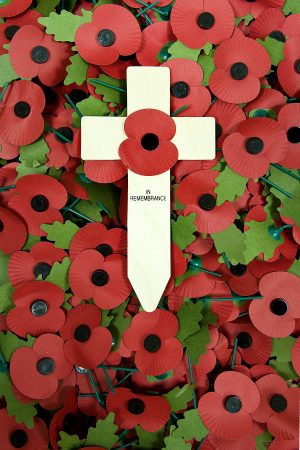
Red poppies are worn on this day and the weeks leading up to Armistice day as personal statement of respect whilst raising funds for Armed Forces personnel in need of support.
The red poppy has a deeply entwined history from WW1 and ffrom the dirt and mud grew a beautiful red poppy and an independent group has introduced purple poppies to remember the horses, dogs and animals which played their part in the war effort.
The red poppy came to symbolize the blood shed during battle following the publication of the wartime poem “In Flanders Fields.” written by Lieutenant Colonel John McCrae, M.D. whilst serving on the frontline.
In Flanders Fields the poppies blow Between the crosses row on row.
In Flanders Fields
In Flanders Fields the poppies blow between the crosses row on row,
That mark our place; and in the sky the larks still bravely singing fly,
scarce heard amidst the guns below
We are the dead short days ago
We lived, felt dawn, saw sunset glow,
Loved and were loved and now we lie in Flanders Fields
Take up our quarrel with the foe:
To you from failing hands we throw the torch; be yours to hold it high
If you break faith with us who die, we shall not sleep,
Though poppies grow in Flanders Fields – John McCrae 1915.

The Act of Remembrance
The Act of Remembrance is non-religious and adaptable to include other tributes of remembrance, reflective of the wider community.
The ceremony begins with an address or opening statement, followed by poems or prayers and the Act of Remembrance following which a Bugler will sound the “Last Post” followed by 2 minutes of silence. A piper will follow with a “Lament” to commemorate Highland Regiments.
The Commitment to Remember is recited and the wreath laying takes place with the conclusion the National Anthem.
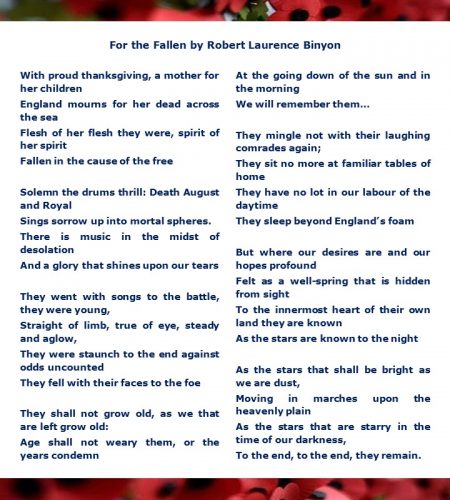
The Act of Remembrance was written by Laurence Binyon as a poem entitled “For the Fallen” and first published in The Times,
For the Fallen
English poet Laurence Binyon was born in Lancaster in 1869.
The Act of Remembrance was written by Laurence as a poem entitled “For the Fallen” in September 1914, a few weeks after the outbreak of war at a time when the British Forces had suffered casualties at the battle of Mons, the battle of Le Cateau and the First Battle of Marne.
It is most remembered for its fourth verse which is also known as the ‘Ode to remembrance’ and carved on war monuments all over the country. It is said the lines of the fourth stanza were written first.
Laurence worked at the British Museum, too old to enlist, he went on to work as a medical orderly for the Red Cross.

The Kohima Epitaph
The Kohima Epitaph is the epitaph carved on the Memorial of the 2nd British Division in the cemetery of Kohima (North-East India).
It reads:
“When You Go Home, Tell Them Of Us And Say, For Your Tomorrow, We Gave Our Today”
The words however are attributed to John Maxwell Edmonds (1875-1958) written during World War I, it is said that the original words written by Edmonds are “For their tomorrow we gave our today”.
Edmonds was an English Classicist, who in 1916 had put together a collection of 12 epitaphs for World War One, a lecturer at Cambridge with absences working for the War Office’s code breaking bureau M.I.1(b).
This famous epitaph is found on numerous Memorials and Monuments throughout the world.
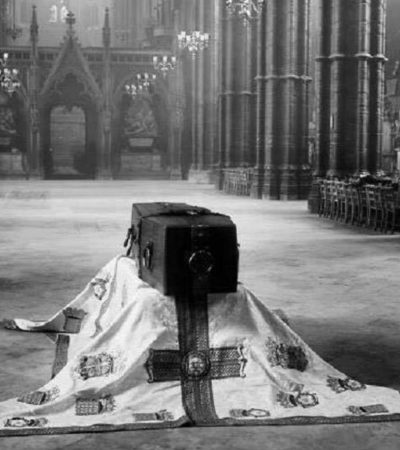
The Unknown Warrior
First conceived by Reverend D Railton, a serving Chaplain who in 1916, after passing a cross noticed upon it the words “an unknown British soldier” marking the grave.
So began the legacy of requesting and successfully delivering the body of this unknown soldier to rest in the Tomb of the Unknown Warrior amongst the highest of the land in Westminster Abbey.
Our children should be taught most carefully that this one Warrior is a
representative of all Britons who fell in the Great War, known or unknown.
The wording on the grave declares: “Thus are commemorated the many multitudes who gave the most that man can give”. Had such a thing been possible, the nation would have given the same honour to each of her sons.”
Menin Gate
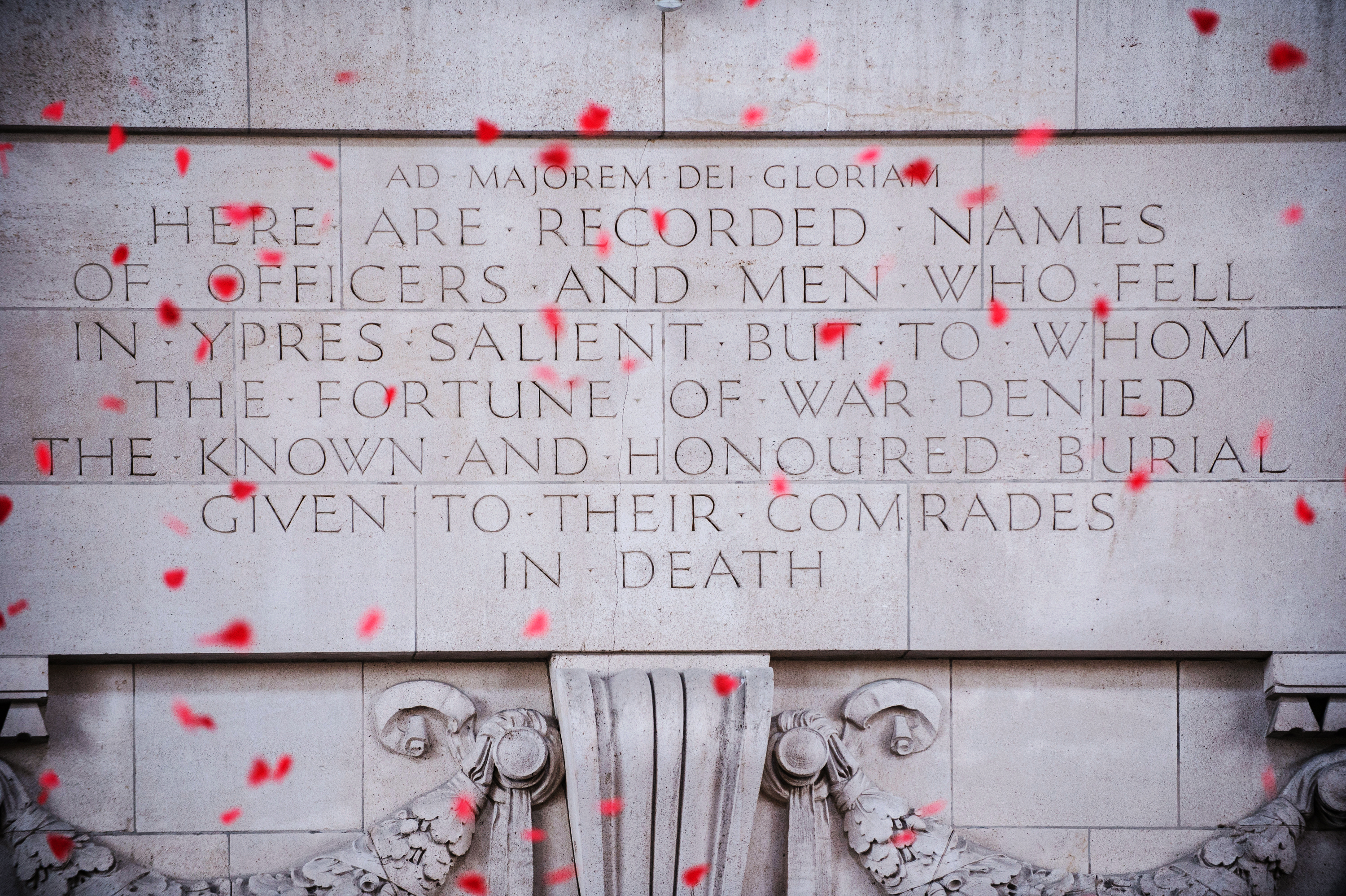
The Menin Gate Memorial to the Missing is a war memorial in Ypres, Belgium, dedicated to the British and Commonwealth soldiers who were killed in the Ypres Salient of World War I and whose graves are unknown.
Every night at 8.00pm (20:00 hours) a moving ceremony takes place under the Menin Gate in Leper – Ypres.
The Last Post Ceremony has become part of the daily life in Leper – Ypres and the local people are proud of this simple but moving tribute to the courage and self-sacrifice of those who fell in defence of their town.
The Last Post
The music of the last post has existed as a bugle call since the 1700’s initially not used as part of maintaining good order.
Over the centuries, and for a number of decades, it signalled the end of a security check. It was simply the sound to let soldiers know their days were completed, and their location was secure.
It represents a somewhat mournful sound to accompany Remembrance events, or often played at a funeral or memorial, with a pause for silent prayer before the notes of Reveille are played to symbolise the new day or a final send off to their eternal lives.
Whether military or not, the Last Post appears a tune familiar to many across the world, united in reflection and remembrance.

VE Day
VE Day stands for Victory in Europe Day, which took place on Tuesday, May 8 in 1945.
It marked the end of World War II in europe, the day on which allied forces announced that fighting had come to an end following the surrender of Germany.
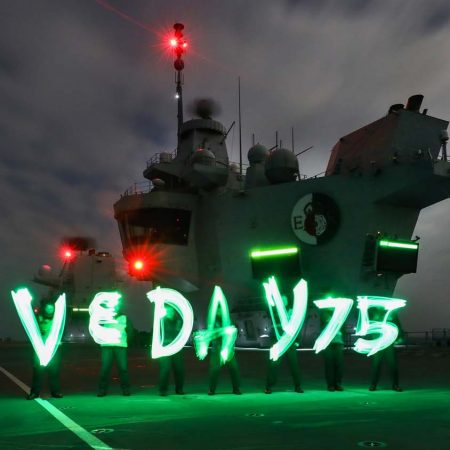
The 75th commemoration 2020 honoured the men and women and the sacrifices of a generation. Here reflected by HMS Queen Elizabeth fully aglow.
Together we reflect on the significance of the date each year and this year especially as a milestone which changed the course of history for the greater world.
Credit: Royal Navy Photography and MOD
VJ Day
VJ Day stands for Victory against Japan and took place on 15 August 1945, marking both the surrender of Japan and the official end of the Second World War.
The 75th anniversary of VJ Day commemorated this year in 2020, honoured the men and women who served and sacrificed in the Far East, of which the Royal Navy played a pivotal and strategic role in continuing the fight for freedom where in Europe the battles had ended.
Together we reflect on this final milestone which brought about an end to the war and the road to peace.
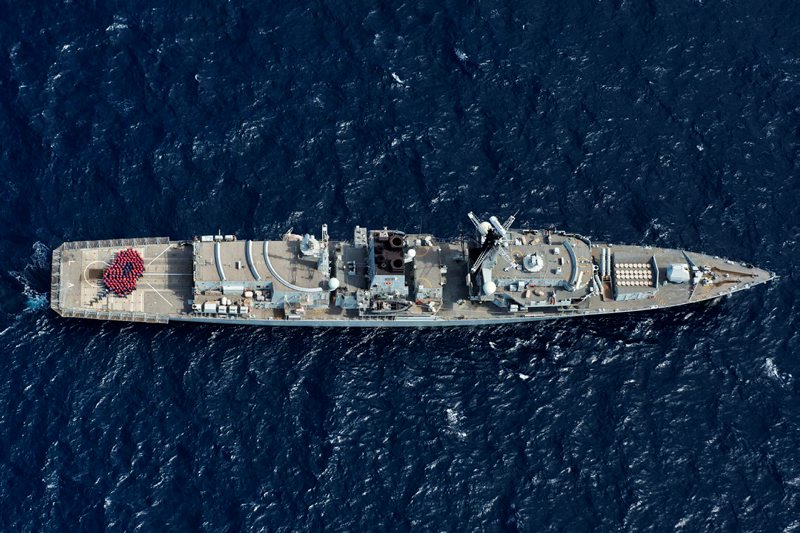
Past to Present
Since the end of World War II, British military forces have engaged in theatres and operations around the world.
From post-war occupation, colonial conflicts, the Cold War period to to today’s war on terrorism and cyber crime, our Armed Forces continue to protect, serve and sacrifice.
Each and every one is remembered during this period of remembrance. “For the Fallen” – for the past and the present.
It is not surprising that it is deemed an honour by serving Armed Forces personnel and veterans to parade at Remembrance, on land, air or at sea, always remembered.
National Service of Remembrance 2020
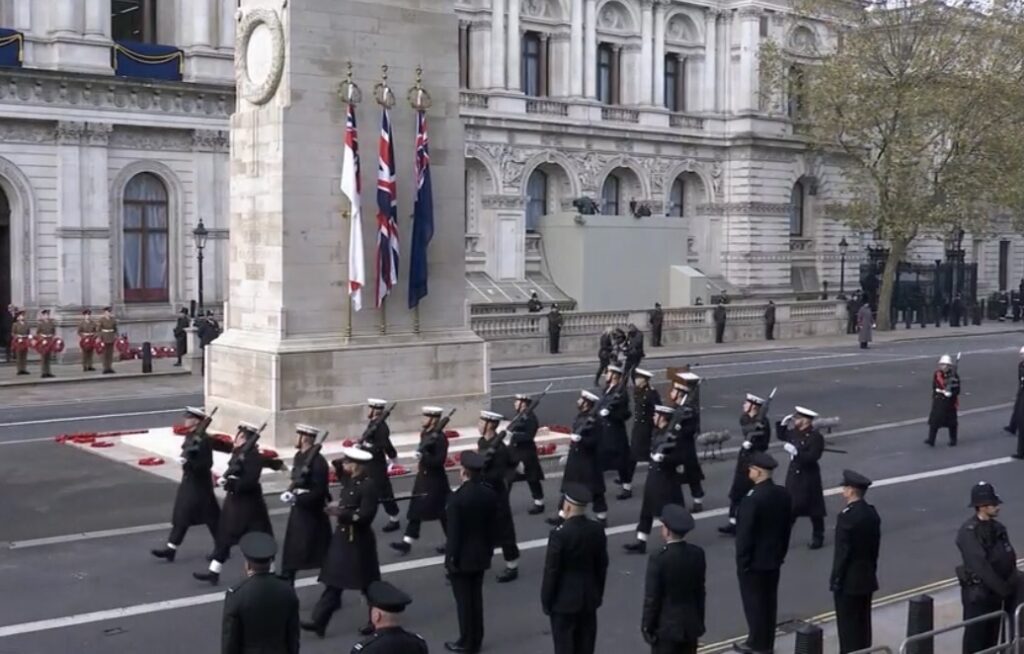
This year in 2020 the National Service of Remembrance is took place on Sunday 8th November at the Cenotaph on Whitehall in London, on the 100th Anniversary of the unveiling of the Cenotaph as the National Memorial of Remembrance.
Whilst we experience many challenges in 2020 and participation in the event severely restricted, the recommendation to commemorate in the safety of our home, the absence of the Veteran’s was felt by all.
The silence offered us all a moment to pause for deep reflection and the two minutes silence our deepest respect to the fallen and their families.
Lest We Forget..
Floral Centenary
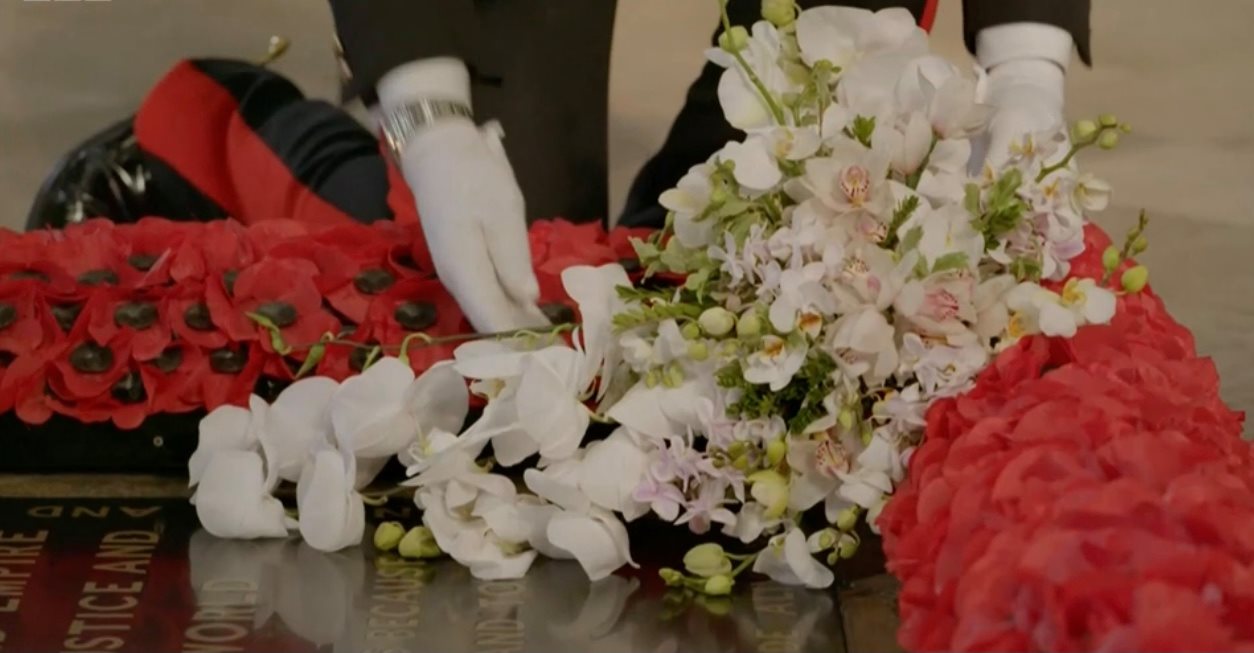
This year in 2020, Queen Elizabeth II attended Westminster Abbey in a private service, to lay a floral wreath made from flowers replicating her bridal bouquet, at the Tomb of the Unknown Warrior.
This is a very a personal remembrance tradition started by the Queen Mother, Elizabeth I and has continued each year thereafter and adopted by each member of the Royal Family who leave their bridal bouquet on the Tomb following their wedding.
The bouquet is a delicate reminder that all who do not return to live a full life, remain close in our hearts and will always be remembered.